One of the fascinating advances in neuroscience is the understanding of brainwaves.

What are Brainwaves?
Your brain is made up of billions of brain cells called neurons, which use electricity to communicate with each other. The combination of millions of neurons sending signals at once produces an enormous amount of electrical activity in the brain, called brainwaves. Researchers have found that not only are brainwaves representative of mental state, but they can be stimulated to change a person’s mental state.
What follows is a basic description of the four major patterns.
Beta Brainwaves 12 – 40 Hz
The predominant frequency when we are fully awake and alert. Stimulating beta activity can improve emotional stability, energy levels, attentiveness and concentration. Producing excessive beta brainwaves can create stress, paranoia, worry, fear, and anxiety, hunger, irritability, moodiness and Insomnia.
Alpha Brainwaves 7-13 Hz
Awake but deeply relaxed. Associated with “peak performance.” Meditation and relaxation, creativity, memory and learning, tranquility, calm and peaceful state. Lessens discomfort and pain and reduces stress and anxiety. Habits, fears, and phobias begin to melt away. When you close your eyes your brain automatically starts producing more alpha waves.
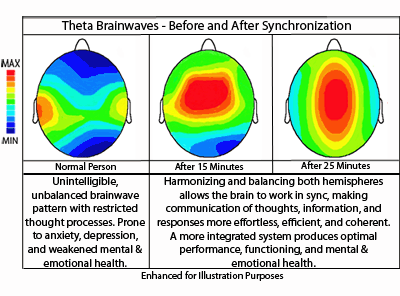
Theta Brainwaves 4-7 Hz
Light sleep and/or extreme relaxation. Receptive mental state that has proven useful for psychotherapy. Insight, intuition, inspiration, heightened problem-solving skills. Dream like imagery and vivid dreaming. Feel more connected to others. Access to subconscious and memories.
Delta Brainwaves 0-4 Hz
Deep, dreamless sleep. Renewal, healing, rejuvenation. Best state for immune system restoration, and health.
Brainwave Entrainment
Brainwave Entrainment refers to the brain’s electrical response to rhythmic sensory stimulation, such as pulses of sound or light. Entrainment is a principle of physics. It is defined as the synchronization of two or more rhythmic cycles.
When the brain is given a stimulus, through the ears, eyes or other senses, it emits an electrical charge in response. These electrical responses travel throughout the brain to become what you “see and hear.” When the brain is presented with a rhythmic stimulus, such as a drum beat for example, the rhythm is reproduced in the brain in the form of these electrical impulses. If the rhythm becomes fast and consistent enough, it can start to resemble the natural internal rhythms of the brain. When this happens, the brain responds by synchronizing its own electric cycles to the same rhythm.
Check out various brainwave Apps for your phone. Here’s one:

You can also find Brainwave tones on YouTube. I like this one:
www.youtube.com/watch?v=5l1Oy9T7-S8&index=15&list=PL_MPSSP1PXTyMAkEmO01jtMIVZvQmNP4L


 Counseling TidBits